



Every smart home upgrade has a second life. The one you don’t think about when you’re installing it. The one that starts the day you hand back the keys.
That’s the moment your landlord walks through the apartment with a clipboard and starts cataloging. The patched-over hole where the smart thermostat used to be. The wall plate that doesn’t quite match the original paint. The dimmer that’s now a regular switch but the wiring underneath has been changed. The motorized shade replacement that’s now permanent because the original blinds got tossed during install.
Each of those upgrades made the apartment better while you lived in it. Each of them left something behind when you left.
This is a piece about what’s left behind. We’re going to walk through what most smart home upgrades leave in your apartment when you move out, and then we’re going to walk through what RYSE leaves.
That second walkthrough is going to be very short.
The Hardwired Smart Device
Before
Smart thermostats. Smart light switches. Smart dimmers. The category of upgrade that requires turning off the breaker and getting your hands behind the wall. While they’re installed, they’re great—you control the temperature from your phone, you set lighting scenes, you forget you ever pulled a chain or flipped a switch like a person from the past.
Then it’s time to move.
After
You uninstall the device, but the wiring underneath has been modified. There’s a wall plate that doesn’t quite line up. There’s a hole where the old thermostat sat that’s now slightly bigger than the new one. The wires you reconnected aren’t exactly how the electrician originally left them. Most landlords won’t care. Some will. The point is, there’s evidence.
RYSE: Before
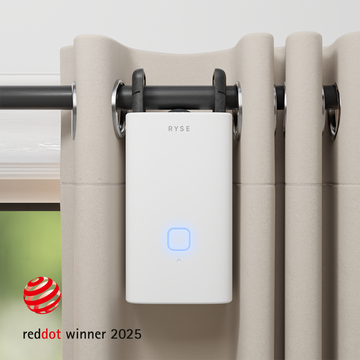
You attach a small device to the chain of the shade that’s already there. The bracket holds it in place—with a screw, with 3M tape, with Command strips, with whatever works on the wall in question.
- Mikhail “It’s relatively easy to install with 3M tape (safe for painted walls and no drilling) and is reasonably quiet when opening/closes shades.”
RYSE: After
That’s not a typo. There is no After. The device clips off, the bracket comes off, the tape peels cleanly, and the wall looks the way it did before you ever moved in. The shade goes back to working with its original chain. Whatever was there at move-in is what’s there at move-out.
The Replaced Motorized Shade
Before
This is the upgrade most renters don’t even attempt, but the few who do make a real commitment to it. The original blinds come down. New motorized shades go up. The motor is wired into the wall, or it’s battery-operated and screwed into the window frame. The mounting hardware is permanent. The original blinds are—sometimes—saved in a closet for move-out. Sometimes they’re thrown away.
After
If you saved the originals, you now have to reinstall them. Which means undoing the new mounting hardware, patching the holes that hardware left, and remounting the originals exactly where they were. If you didn’t save the originals, you’re buying replacements—ones that hopefully match. Either way, the window frame has been modified. There are extra screw holes. There may be color differences in the paint. There’s no version of this where the window frame ends up exactly as you found it.
RYSE: Before
The original shades stay. The chain stays. The window frame is untouched. RYSE attaches to the chain and adds a brain to the shade that’s already there—the one your landlord chose, the one the lease describes, the one that was there when you signed.
- Janine D. “I struggled to find a workable solution for control blinds within a rental apartment. There are blindroller replacements, internal motors, or outright replacement of all the blinds… The SmartShade solves all of this while retaining the existing blinds.”
RYSE: After
Same shade. Same chain. Same window frame. Nothing was replaced because nothing needed to be replaced. The walkthrough finds exactly what it was supposed to find.
The Drilled-In Mount
Before
Many smart home accessories—cameras, sensors, mounting brackets for various devices—require drilling into walls or window frames to install. The holes are small. They’re easy to ignore while you’re living there. They’re harder to ignore when someone is inspecting the apartment with a clipboard.
After
Spackle. Sandpaper. A small can of paint that hopefully matches the wall color. The hour of work nobody enjoys. Sometimes it comes out invisible. Sometimes the patched spot catches the light differently and you can see exactly where the hole was.
RYSE: Before
RYSE can be installed without drilling at all. Customers have used 3M tape, Command strips, and even a single screw using an existing hole when the renter didn’t want to make a new one.
- Michael H. “Easy to install (you don’t even need a power drill), easy to set up, and had them both working and synced in ~20min.”
RYSE: After
Nathan didn’t add a hole that wasn’t already there. Michael didn’t use a drill at all. Two installations, neither of which left a single new mark on the apartment. That’s the whole point of “leaves no trace”, it isn’t about hiding what you did. It’s about not having done anything that needs hiding.
Optionally, you can also install RYSE SmartShades with the screws and anchors included in the kit. This is an excellent option for those who want extra hold, and don’t mind a minor spackling job on move-out.
The Upgrade You Can’t Quite Take With You
Before
Some upgrades aren’t hardwired and aren’t replacements—they’re just bulky, awkwardly attached, and not really designed to come off. Smart curtain rods. Specific window-mounted devices. The kind of thing that, once you’ve installed it, you start treating it as permanent because removing it would create more problems than leaving it.
After
It stays. Because removing it would mean unscrewing six different brackets and patching what’s underneath, and you’re already overwhelmed with the rest of the move. The next tenant inherits something they didn’t ask for. The landlord is fine with it. You leave behind another small upgrade you paid for and won’t use again.
RYSE: Before
RYSE was designed to come off. The whole product—device, bracket, battery pack—fits in a shoebox. It detaches in minutes.
- Rahul T. “Have it installed in every room in the house. Better than other companies — it has a detachable battery that can be charged without running wires everywhere.”
RYSE: After
Rahul put it in every room without leaving anything behind. The detachable battery, the wireless setup, the bracket-mounted hardware—these aren’t just convenience features. They’re the reason RYSE leaves no trace when you leave.
The Walkthrough
Here’s how move-out actually goes when RYSE is the upgrade you made.
You unclip the device from the chain. You take the bracket off the wall—the screw goes back in the original screw hole, or the tape peels cleanly off the painted surface. You detach the battery pack. You put the whole setup in a box and load it into the moving truck.
The shade is back to being a regular shade. The chain hangs the way it did when you moved in. The wall has nothing on it. The window frame is unmodified.
Your landlord walks through the apartment with the clipboard. They check the shades, find them working. They check the walls, find them clean. They check the windows, find them as they were.
There is nothing to mention. There is nothing to deduct. There is nothing to talk about.
This is what “leaves no trace” actually means in practice. Not just “didn’t damage anything.” But “didn’t change anything that has to change back.” Those are different standards, and the second one is the only one that matters when you’re standing in an empty apartment with a clipboard-holder asking what’s been done to the place.
The Bottom Line
Most smart home upgrades are conversations you eventually have to have with your landlord. RYSE isn’t.
That’s not because it’s less of an upgrade. It controls your shades by app, by voice, by schedule, by sunrise and sunset. It does the thing you wanted a smart shade to do. It just happens to do it in a way that doesn’t require anything that needs explaining at move-out.
There’s no After section because there’s no After. The apartment looks like the apartment. The shades look like the shades. The walls look like the walls. The only thing that’s different is that the device that made all of it work is sitting in a box in your moving truck, on its way to the next place, where it’ll do the same thing without leaving anything behind there either.
What your landlord doesn’t need to know is that you ever upgraded anything at all.


