



Real stories from real RYSE customers
Apartments have a particular relationship with light. There’s less of it than a house, usually, fewer windows, more shared walls, the room across the hall blocking what would have been a second source. The windows you do have matter more because of it. The morning light hits exactly one wall. The afternoon glare on the TV happens at the same time every day. The bedroom either gets the sunrise or it doesn’t.
In a small space, light isn’t a feature, it’s the architecture. It decides when the room feels open and when it feels closed in. It decides whether you can see your laptop screen. It decides whether the apartment feels lived-in or like you’re camping in a sublet.
RYSE customers in apartments figured out something interesting: the upgrade that made their space feel bigger and better wasn’t a renovation. It was controlled. The same square footage, the same walls, the same shades that came with the place, but suddenly the light moved when they wanted it to.
Here’s what that looks like, room by room.
The Living Room
In an apartment, the living room is rarely just the living room. It’s also the dining room, the office, the workout space, the place where guests sit when they come over. It changes function five times a day, and the one variable that has to keep up is the light. Bright for working, dim for movies, soft and warm for evenings, blocked entirely when the afternoon sun hits the screen.
- Chris K. “I have these huge west facing corner windows but sometimes I want to watch some tv after work. I love being able to say ‘movie mode’ to my Alexa and have the curtains lowered and lights turned down. I also use my shades while I’m at work to keep my apartment cooler to save on energy bills.”
- Alex L. “Works awesome for my oversized living room window. Not too noisy and turns my existing chain shades into fancy powered shades at a fraction of the cost.”
Chris turned his west-facing corner into a movie room with one Alexa command. Alex had an oversized window—the kind that looks great in real estate photos and creates a lot of glare in real life—and now controls it from across the room. In neither case did the apartment get bigger. The function of the room just stopped fighting itself.
This is what apartment living looks like when the light cooperates: one room that’s actually doing all five jobs you’re asking it to do.
The Bedroom
Bedrooms in small apartments tend to be small bedrooms. Often there’s exactly one window, sometimes facing east, sometimes facing nothing in particular. The window is closer to the bed than it would be in a house, which means light hits faster and harder when it comes through, and the chain you’d have to walk over to is right where you don’t want a person to walk in the morning.
- MaryJo “I’m loving this thing so much! We have beaded shades in our master bedroom and it’s also the room that gets the beautiful sunrise lighting in the morning. Being able to stay cozy in bed and use the app (either in the moment or by programming it) to move the shades has been such a cool luxury to have.”
- D’Anna K. “Ryse has totally automated my shade control. First it was pretty easy to install and connect to my phone. Now I can lay in bed in the morning and raise my shades. SO nice.”
- Connie F. “Our bedroom is upstairs facing the morning sunrise and now we can remotely open the blinds to see the sun rise. The chain on the blinds is 9 ft long so it opens perfectly with the RYSE control.”
MaryJo gets the sunrise without leaving the bed. D’Anna does the same. Connie has a chain that’s nine feet long, the kind of detail that only matters when you’re standing on a mattress trying to reach it, and now opens the blinds before she’s vertical. None of them have a bigger bedroom than they did before. The bedroom just behaves more like one.
The Office Corner
Most apartments don’t have an office. They have a corner of the bedroom, or a section of the living room, or the area near the window where someone wedged a desk. Whatever it is, it’s functioning as a workspace because there was nowhere else to put one. Which means the light situation was decided by the apartment, not by you. And the light situation, when you’re on calls all day, is a real problem.
- Kyle R. “Ryse has been a great addition to my office allowing me to automate the opening and closing of my window shades, even when I’m not there. It’s also nice to be able to use the Google Assistant when it’s particularly sunny during a meeting to close the shade.”
- Clifford S. “Got a 2nd one for my office after the 1st worked so well. I love that I can have shade stop above the picture frames I leave on the window shelves in my office.”
- Alex T. “Was quoted $7,500 to have my office blinds automated and was able to self install for under $750.”
Kyle handles the surprise glare during a meeting without breaking eye contact with the camera. Clifford stops his shade exactly where he wants it, above the picture frames on the sill, a level of precision that matters in a small space where every inch is doing something. Alex priced out the alternative for his office and walked away from a $7,500 quote in favor of a $750 install. Each of them solved an apartment-office problem without changing the apartment.
The Kitchen Nook
Small apartments tend to merge spaces. The kitchen flows into the dining area which flows into the living room, all under whatever light is coming through one or two windows. Privacy in the evening, when you’re cooking with the lights on and the windows are basically a stage, becomes a recurring small problem. The standard fix is to remember to lower the shades. The better fix is to stop having to remember.
- Kyle R. “In my kitchen, I use scheduling more extensively to easily gain privacy in the evenings.”
- Leonid V. “The Ryse smart shade automation is a game-changer! Scheduling is a breeze, allowing me to program the shades to open and close automatically with the sun. This not only adds convenience but also helps with energy efficiency by regulating the temperature in my dining room.”
- Sam C. “This is a great way to round out my smart home! I love the voice control for my dining room and bedroom.”
Kyle handed his evening privacy over to a schedule. Leonid noticed the temperature in his dining room got more consistent once the shades were running on solar time, a small detail that becomes a real one when your apartment has minimal HVAC and a lot of glass. Sam uses voice control because reaching across the dining table to a chain isn’t something he wants to keep doing.
In a merged-floor-plan apartment, the kitchen and dining area benefit from automation more than people expect. They’re the rooms you’re moving through, not sitting in. The shades shouldn’t require you to stop.
The Balcony Door
Many apartments have a balcony. Many of those balconies come with a heavy sliding glass door, a thick shade, and a chain that’s either annoying to reach or impossible to pull cleanly because the shade is twice the size of a normal window. The balcony itself is often the apartment’s best feature. The shade in front of it is often its most underused fixture.
- Keshav S. “Requires just a little bit of skill to set up but working great since I installed it a few days ago. I use it to raise my balcony shades and I use my balcony more often now that the shades are automated.”
- David B C. “Installed wireless Ryse on my large patio door. The shade was heavy to pull open. Ryse handles the job effortlessly! I’m never going back to manuals.”
Nathan installed his on a balcony door without adding a single new hole. Keshav noticed something subtle but important, he uses his balcony more often now, because the friction of opening the shade is gone. David had a heavy patio door shade he’d basically given up on; RYSE handles it without effort. Three different balconies. Three different doors. The same outcome: the apartment’s best feature, finally accessible.
The Whole Apartment, Working Together
The thing that surprises people about doing this room by room is that it doesn’t stay room by room. Once two or three rooms are running on schedules and voice commands, the apartment starts to feel like a single coordinated thing rather than a collection of windows you have to manage individually.
- Benjamin G. “Absolutely brilliant is the only word to describe this system! I bought 5 and have them installed in the living room/dining room, bedroom, and office. The video shows how Ryse turns a regular ol’ apartment into a sophisticated and modern environment.”
- Cesar M. “The smart shade and all of the accessories are crazy easy to install. This has leveled up my apartment so much and has simplified my day even if its for something as small as opening and closing the blinds.”
Benjamin’s line is the one that gets at it. “A regular ol’ apartment” became something else, not because the apartment changed, but because the way it responded to him did. Cesar called it “leveled up,” which is the right word for what happens when a small space starts behaving like it knows you live there.
This is the underrated thing about apartment automation: it’s not that one room got smarter. It’s that the apartment, as a whole, started to feel like more than the sum of its square footage.
The Bottom Line
You can’t make an apartment bigger. You can’t move a load-bearing wall. You can’t add a window where there wasn’t one. Most of the things that would actually transform a small space are off-limits to renters and out of budget for everyone else.
What you can do is change how the space behaves throughout the day. Open the right windows at the right time. Close them when the sun hits the TV. Wake up to natural light in a bedroom that, until now, was at the mercy of whichever direction it happened to face. Hand the whole rhythm of your apartment over to a schedule and stop thinking about it.
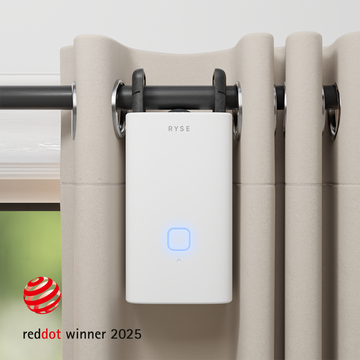
That’s not a renovation. That’s a small device on the chain of a shade you didn’t pick, in an apartment you don’t own, doing exactly what a much bigger and more expensive solution would have done, without changing a single thing about the space itself.
Same apartment. Same windows. A completely different place to live.
RYSE handles it without effort. Three different balconies. Three different doors. The same outcome: the apartment’s best feature, finally accessible.


