



Smart blinds are designed to enhance comfort, efficiency, and convenience. However, one practical concern often determines whether they truly improve daily life: How noisy are they?
While smart blinds are meant to operate seamlessly in the background, not all systems meet that expectation. Some produce noticeable mechanical noise that disrupts sleep, work, or quiet moments at home. Others operate with refined, controlled motion that is barely perceptible.
This guide explains why noise levels vary so widely and why retrofit solutions like RYSE are engineered for smoother, quieter performance.
Why Noise Matters in Smart Blind Performance
Smart blinds typically operate during the most sensitive moments of the day. This includes early mornings, late evenings, or during focused work hours. In these settings, sound is amplified by the stillness of the room.
Even moderate mechanical noise can:
- Interrupt sleep or wake occupants prematurely.
- Distract during important meetings or video calls.
- Undermine the sense of calm that smart homes are meant to provide.
True smart living depends on discretion. Quiet operation is essential to ensuring smart blinds feel integrated into your home rather than intrusive.
Are Smart Blinds Inherently Noisy?
The short answer is no. However, noise is a common byproduct of poor design or improper installation. Motorized blinds vary significantly in sound levels due to several key factors.
1. Motor Engineering and Torque Control
The motor is the primary determinant of noise. Lower-quality motors often rely on aggressive gearing and uneven torque, which produces an audible buzzing or grinding sound. Higher-quality motors are engineered to distribute force evenly. This reduces both vibration and sound.
2. Movement Speed and Motion Profile
Fast-moving blinds may appear efficient, but rapid acceleration and abrupt stops often increase noise and mechanical wear. Well-designed systems use measured, consistent motion to minimize stress and audible vibration. Slower, smoother motion is typically much quieter and more durable.
3. Installation Method and Vibration
Noise is not only produced by the motor but also by how vibrations travel through your home. Hardwired or wall-integrated systems can transmit vibration directly through window frames or walls. Retrofit systems, when designed properly, isolate this movement and reduce resonance.
4. Shade Size and Chain Material
Heavier or taller shades require greater lifting force. Systems not designed to manage that load efficiently may strain under pressure, which increases motor noise. Materials also matter. Consistent tension is required to prevent clicking or rattling during movement.
Quiet vs. Loud Smart Blinds: Key Differences
|
Feature |
Louder Systems |
Quieter Systems (e.g., RYSE) |
|
Motor Type |
Entry-level with minimal dampening |
Torque-controlled with smooth gearing |
|
Motion |
Aggressive starts and stops |
Gradual, measured acceleration |
|
Installation |
Permanent, structural mounting |
Non-invasive retrofit mounting |
|
Sound Profile |
Disruptive buzzing or grinding |
Low-volume, discreet hum |
How RYSE is Designed for Quiet Operation
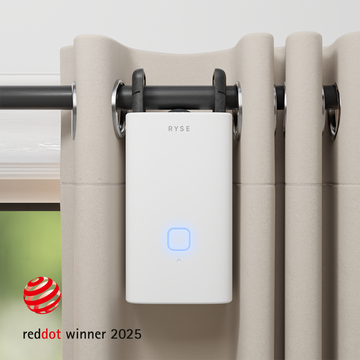
The RYSE SmartShade is engineered for everyday use. Noise reduction is not an afterthought; it is a direct result of thoughtful design.
Smooth, Controlled Motor Performance
RYSE uses a calibrated motor system that emphasizes gradual starts and stops. By providing consistent torque across various shade sizes, it reduces chain vibration. The result is a controlled, low-noise motion that blends into the environment.
Retrofit Design That Minimizes Disruption
Because RYSE retrofits onto your existing beaded-chain shades, no drilling or rewiring is required. This minimizes structural vibration. Since you are motorizing the existing control mechanism, you preserve the weight and feel of the window treatments you already trust.
Where Quiet Smart Blinds Matter Most
Bedrooms and Nurseries
Low-noise blinds prevent sleep disruptions. They support healthy light routines without the jarring sound of a loud motor at sunrise.
Home Offices
Quiet operation allows for light and privacy adjustments during video calls without breaking your focus or distracting colleagues.
Living Areas
Discreet automation ensures that your smart features enhance the space without becoming a focal point of unwanted noise.
Conclusion: Are Smart Blinds Noisy?
Smart blinds are only noisy when design compromises are made. Well-engineered systems, especially retrofit solutions, can operate with minimal sound to deliver automation that feels natural.
The RYSE SmartShade demonstrates that smart blinds can be quiet, sustainable, and seamlessly integrated without replacing your existing systems. True smart living should enhance your comfort, not compete with it.


